EXPLORE NAMIBIA
FISH RIVER CANYON, NAMIB DESERT, COAST, DAMARALAND & ETOSHA SAFARI
Namibia is mostly arid, the spectacular landscape resembles Mars, with vast expanses of rocky mountains and canyons, vast orange and white sand dunes, and empty savannas, while the rugged Atlantic coastline is one of the most treacherous in the world.
This 12-Day Safari offers visitors the best of Namibia, the opportunity to see this fascinating landscape, but also provides them with the interesting history, and exceptional wildlife viewing.


- TOUR PRICE
Departing Cape Town:
- R47,600 per person sharing
- Single Supplement of R7,900 applies
❗ Excludes flights
- EXCLUDES
- International flights
- Regional & Domestic flights
- Insurance for lost luggage, cancellation, medical repatriation, visas…
- Extra activities not displaying in this itinerary or marked by the symbol "Not Incl."
- Meals not specified in the itinerary
- Drinks, tips, curios etc.
- 12 DAY ITINERARY
Day 1: Fish River Canyon
- Transfer from Noordoewer to Fish River Canyon
- Fish River Canyon Excursion (Sperrgebiet)
- Dinner at Canyon Village
Today we’ll head to the Fish River Canyon. The Fish River Canyon in Namibia’s South is one of the world’s largest canyons and one of Namibia’s most recognised natural wonders. For more than 160km (99miles) the Fish River, Namibia’s longest river, washed into the ground up to 550m (1804ft) deep and up to 27km (17miles) wide.
The Fish River has its source in the Eastern Naukluft Mountains and in Richtersfeld flows into the Orange River, after travelling for more 650km (404miles) through the desert of Southern Namibia. In its lower part (between Seeheim and Ai-Ais) it crosses a mountain range and thereby forms the Fish River Canyon.
INCLUDED
- Dinner, Bed & Breakfast
- Bottled Still Water
EXPERT TIPS
Fish River Canyon is arguably the second largest canyon in the world, after the Grand Canyon in the US. Many plants can be found in the region which have adapted to the harsh environment. The best known are the picturesque quiver trees, the euphorbias and the aloes.
The canyon is, of course, huge, and a large section in the north is protected by private nature reserves. The southern area is protected as the Ais-Ais and Richtersveld Transfrontier National Park, a cross-border reserve that covers areas in both Namibia and South Africa. The best place to access and to see the Fish River Canyon are from the Namibian side.
Many animals also managed to survive in the conditions of this hostile environment like giraffe, mountain zebra, oryx, kudu, springbok, ostrich, leopard and the fascinating feral horses of the Namib.
Day 2: Aus
- Breakfast & Transfer from Fish River Canyon to Bahnhof Hotel, Aus
- Arrival and downtime at Bahnhof Hotel
- Sunset Drive to Garub
- Dinner at Bahnhof Hotel
Today we make our way to Aus. There is something extraordinarily special about the landscape around Aus in the Sperrgebiet Rand park. It is where streaks of Namib sand fuse with the bleached grasses of the Pro-Namib in a sensuous slow dance of splendour.
The Namib’s, as the feral/wild horses of the Namib Desert are called, hold a powerful fascination. Living on the barren plains around the Garub on the eastern frontier of the Namib Desert, their origin is shrouded in mystery, yet, despite the harsh, arid landscape, the wild horses of the Namib Desert have adapted and survived against all odds.
We’ll go on a short drive from our hotel late this afternoon to look for the feral/wild horses of the Namib.
ACTIVITIES AND SERVICES
Garyb Desert Horses
INCLUDED
- Dinner, Bed & Breakfast
- Sunset Drive to Garub
- Bottled Still Water
EXPERT TIPS
Aus and surrounds offers many interesting activities and attractions. There is something to do for every member of the family. This includes a new museum, which should encourage more visitors to stop and discover something about an area that is all too often ignored.
One source of the origin of the Namib’s is that the herd stems from the bombing of the Union of South Africa Troops stationed at Garub in 1915. The grazing herds scattered in the ensuing turmoil.
The remarkable similarities in conformation and markings of horses from Emil Kreplin’s stud farm at Kubub, just south of Aus, suggests this as another source of their origin.
Day 3: Aus
- Breakfast & Transfer from Aus to Kolmanskop
- Transfer from Kolmanskop to Lüderitz
- Lunch (Not Incl.) in Lüderitz
- Visit toDiaz Point and return to Aus
- Dinner at Bahnhof Hotel
This morning you can head to the town of Lüderitz, and also visiting Kolmanskop, nicknamed the ‘Ghost Town’. Kolmanskop used to be a small railway station in 1908, when the railway between Lüderitz and Keetmanshoop was constructed.
The station derived its name from a Nama man named Coleman, who got stuck at the site with his ox wagon and consequently died of thirst.
ACTIVITIES AND SERVICES
Kolmanskop
INCLUDED
- Dinner, Bed & Breakfast
- Kolmanskop Excursion
- Diaz Point
- Bottled Still Water
EXPERT TIPS
It was in 1908 that a railway worker Zacharias Lewala found a shiny stone and took it to the chief railway foreman August Stauch. Stauch was a hobby mineralogist and had advised his workers to bring any unique stone they might find to him. He immediately assumed the find of Lewala to be a diamond, which was later confirmed, after the stone had been examined by his friend and future partner Söhnke Nissen, a mining engineer. Stauch and Nissen did not announce their special find, but rather quit their jobs and secured claims of 75 km² at Kolmanskop. They successfully continued their search for diamonds.
We will head to Kolmanskop in the morning before exploring Lüderitz.
Day 4: Sossusvlei
- Breakfast & Transfer from Aus to Namibia Naukluft area
- Lunch (Not Incl.) on route
- Dinner at Hammerstein Lodge
You will be collected between 08:30 and 09:00 from your accommodation in Windhoek this morning, as we will have a relatively long transit today on route to the Sesriem area.
We will travel via the Tsaris Mountains, known for their interesting and ancient geological history.
We hit the road for our final stretch from Bullsport to our camp on the edge of the Sossusvlei National Park. It is here that your guide will familiarize you with the incredible Namib Desert and the dunes of Sossusvlei, before a lovely dinner at our camp.
Namibia is mostly arid, the spectacular landscape resembles Mars, with vast expanses of rocky mountains and canyons, vast orange and white sand dunes, and empty savannas, while the rugged Atlantic coastline is one of the most treacherous in the world.
Namibia is also the perfect country to experience the trials and tribulations of Africa for the first time. It’s safe (mostly), the official language is English, the cost of travel is affordable, it offers an exceptional wildlife experience, and its unique landscapes are some of the most impressive in the world.
INCLUDED
- Dinner, Bed & Breakfast
- Bottled Still Water
EXPERT TIPS
The dunes are best visited in the morning or later afternoon. At this time, the colour is more vibrant, the heat is less oppressive, and the crowds are diminished. At times, you’ll feel like the dunes are all yours to explore, so make the most of it. Hike (or try) to the top of one and admire the Mars-like landscape from above – it’s incredible.
Probably the most famous and photographed dune in Sossusvlei, Dune 45 is easily accessible; it lies 45km from Sesriem, just off the paved road.
Elim dune is located 5km inside the park gate and is an easily accessible option. It’s partially covered in vegetation, making it more distinct to other dunes in the area.
Like most great attractions around the world, it’s possible to go ballooning over the dunes of Sossusvlei. Flights depart before sunrise, where you’ll be treated to an epic live show of mother natures beauty. Booked through Namib Sky Balloon Safaris, flights cost around N$8,200 and include a champagne breakfast.
Day 5: Sesriem
- Breakfast & Excursion to Deadvlei andSossusvlei
- Arrival at Sesriem for Lunch (Not Incl.)
- Sesriem Canyon excursion
- Dinner at Sossus Dune Lodge
An early start is required today in order for us catch the soft light of the sunrise over the divine Namib Naukluft Mountains towards the east.
We make our way to the sand sea this morning, and our first stop will the famous Dune 45 which we will have the option of climbing, as the views of this remarkable landscape is even more mesmerizing from the dune summits. We will spend most of our time around the Deadvlei area, famed for and characterized by the dark, dead camel thorn trees contrasted against the white pan floor.
We head back to our Sesriem for some lunch after the excursion that will see us go on a short outing to the Sesriem Canyon.
ACTIVITIES AND SERVICES
Sossusvlei & Sesriem Canyon
INCLUDED
- Dinner, Bed & Breakfast
- Sossusvlei National Park entrance & park fees
- Sossusvlei & Deadvlei Excursion
- 4×4 Shuttle fees for Deadvlei
- Sesriem Canyon
- Bottled Still Water
EXPERT TIPS
We enter Sossusvlei at sunrise in the morning and remember to take plenty of water, sun cream, a hat, walking shoes, camera batteries and film/memory. Explore some of the world’s highest dunes and a sheltered pan with petrified trees that are hundreds of years old; climb the dunes and look out over at the sand and sea. Private reserves in the area reveal fascinating flora, fauna and ancient desert landscapes.
Other attractions in close proximity to Sossusvlei include Sesriem Canyon, Dune 45, Hiddenvlei, Big Daddy and Deadvlei. All of these attractions can be accessed from the road that takes you to Sossusvlei, and are all well worth a visit. In a number of areas surrounding Sossuvlei look out for the petrified dunes.
The Sossusvlei area offers visitors some of the picturesque and indescribable landscapes in the world, with unbelievable colour contrasts at sunrise and after sunset along with amazing photographic opportunities. Here we will also look at the abundance of small life, which baffles the mind as to how the numerous creatures can survive in this harsh and unforgiving Namib desert.
Day 6: Swakopmund
- Breakfast & Transfer from Sesriem Area to Swakopmund
- Tropic of Capricorn
- Arrival in Swakopmund and Lunch (Not Incl.)
- Dinner (Not Incl.) in Swakopmund
We depart from Sesriem early this morning, maybe even catching a delightful sunrise during our breakfast. On our way to Swakopmund, we briefly stop at the Tropic of Capricorn for some memorable photographs and continue onto the two geologically unique mountain passes, the Gaub and Kuiseb Mountain passes.
Upon arrival in Swakopmund, we will have some time for lunch and thereafter a chance to explore the monuments of this historical city via a short walking tour. In the late afternoon you will have time to relax for at the beach and then head out to discover an assortment of cuisines which Swakopmund has to offer when we go for a seaside dinner.
ACTIVITIES AND SERVICES
Tropic of Capricorn
OPTIONAL
Desert Explorers Quad Biking 1 Hour Tour
Sossusfly Scenic Flight
INCLUDED
- Bed & Breakfast
- Bottled Still Water
Day 7: Swakopmund
- Breakfast & Optional Activitiesin Swakopmund
- Free Time inSwakopmund
- Dinner (Not Incl.) at a seaside restaurant
Swakopmund, Namibia, was founded two years later than Windhoek, in 1892, by Captain Curt von Francois as the main harbour of German South West Africa. Increased traffic between Germany and its colony necessitated establishing of own port as Walvis Bay, located 33 kilometres south, was already in British possession. The choice fell on Swakopmund where water could be found and because other sites checked (including Cape Cross) were unsuitable.
OPTIONAL
Laramon Tours Dolphin Cruise
Sandwich Harbour 4×4
Tommy’s Tours and Safaris Living Desert Tour
Sossusfly Coastal Impression
Kristall Galerie
INCLUDED
- Bed & Breakfast
- Bottled Still Water
EXPERT TIPS
Catamaran Charters (https://www.namibiancharters.com/activities/dolphin-seal-cruise/) – N$1,100 / Adult (08:00 – 12:30) Catamaran Charters offers cruises in the Walvis Bay lagoon in four luxurious catamarans. In search of the marine Big 5 guests will enjoy an unforgettable experience.
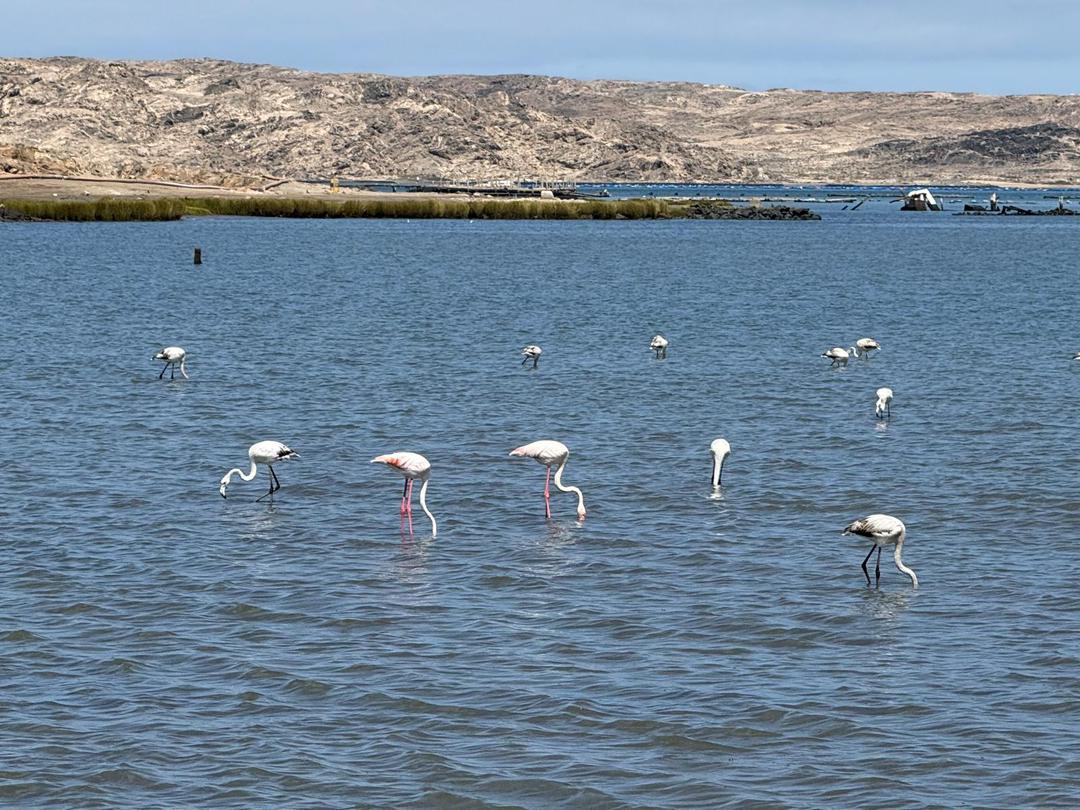
Kayaking “Eco Marine Tour” (https://www.pelican-point-kayaking.com) – N$990 / Adult (08:00 – 12:15) Jeanne Meintjes, owner and the guide of the Eco Marine Tours offers very personal kayak tours in teh Walvis Bay Lagoon. Nowhere else will you get as close to flamingos and pelicans, seals, Heaviside’s and Benguela dolphins as with a kayak.
Living Desert Tour (https://livingdeserttours.com.na) – N$950 / Adult (08:00 – 12:30) With charisma and lots of humour Chris Nel explains the flora and fauna of the desert world around Swakopmund. Starting with a short excursion to the mouth of the Swakop River, the tour continues on a small path into the 2010 proclaimed Dorob National Park.
Sandwich Harbour 4×4 (https://www.sandwich-harbour.com/activities/half-day-sandwich-harbour-4×4-excursion/) – N$2,250 / Adult (08:00 – 12:30 or alternatively there is an afternoon tour from 12:30 – 16:30) The beautiful dunes of the Namib Desert meet the rough Atlantic Ocean: The 4×4 excursion of „Sandwich Harbour 4×4“ to Sandwich Harbour south of Walvis Bay is scenically unique, exciting and extraordinarily organized.
Namib Desert Scenic Flights (https://www.sossusfly.com) – Please refer to website as there are different flight options and rates Exclusive and luxurious scenic safaris to many of the coastal highlights are offered. Highlights are the Namib Desert with its Sossusvlei, the Skeleton Coast with its ship wrecks, the Kuiseb Canyon, Cape Cross with its huge seal colony and many more.
Quadbiking (https://namibiadesertexplorers.com) – N$450 / Adult per hour (this activity can be conducted any time of the day between 08:00 – 17:00) An hour quad-bike ride takes you out along the dune-belt between Swakopmund and Walvis Bay. You will head out to the prime sand-boarding dune. Spend an hour lie-down sand-boarding and return back to Desert Explorers HQ after. This is the ideal tour for the adrenaline junkie.
Skydiving (https://skydiveswakop.com) – N$4,250 / Adult (35-Second Free Fall and this activity can be conducted any time of the day between 08:00 – 17:00 depending on the weather) Ground Rush Adventures is a well-established skydiving company and has been delivering exciting experienced for visitors to Swakopmund since 1997. Since then, they have completed over 120 000 tandem skydives while maintaining a spotless safety record.
Day 8: Spitzkoppe
- Transfer from Swakopmund to Spitzkoppe
- Arrival at Spitzkoppe Cabin Camp
- Lunch (Not Incl.) at Spitzkoppe Cabin Camp
- Braai Dinner at Spitzkoppe Cabin Camp
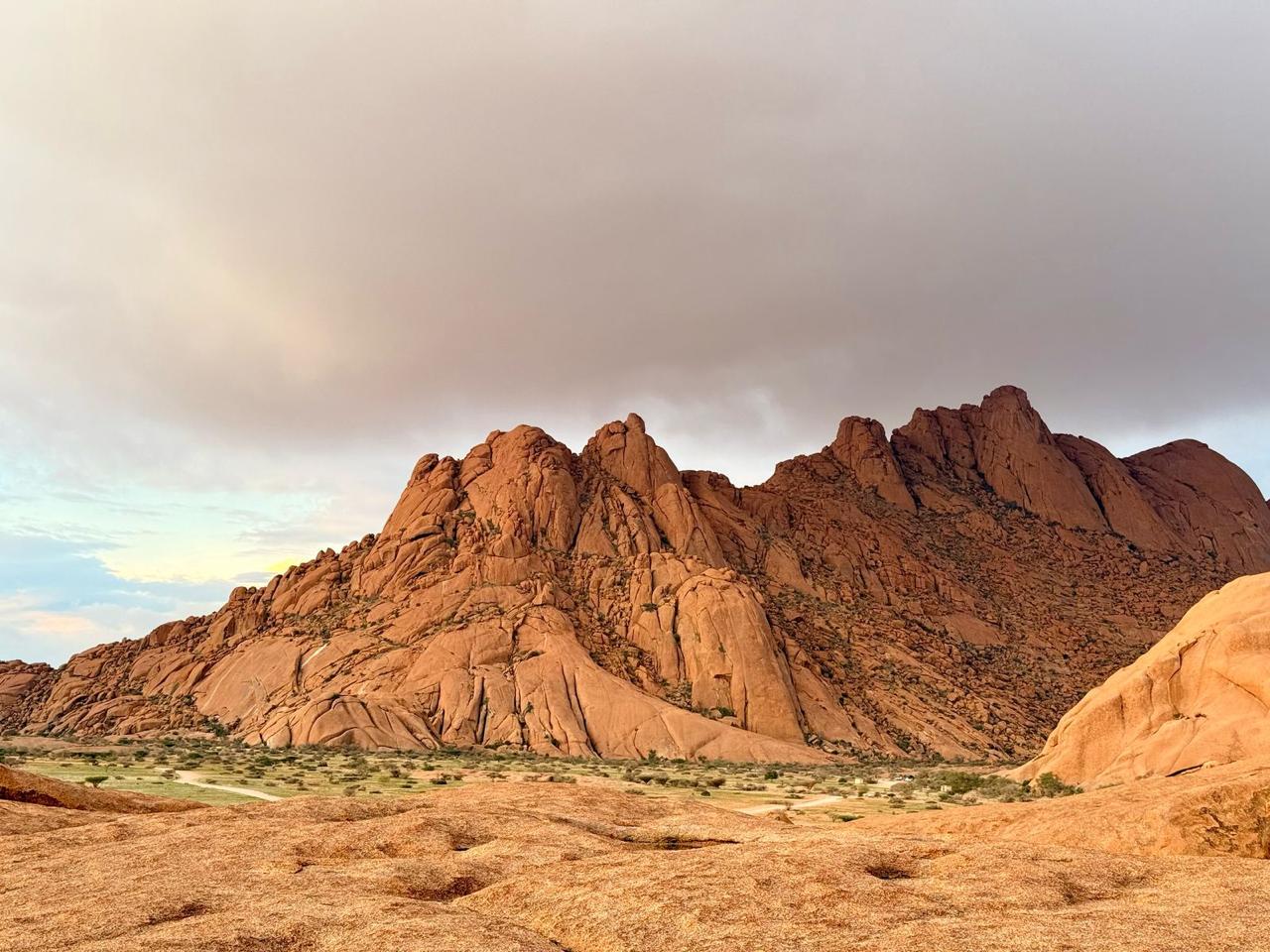
For hikers and mountaineers the Spitzkoppe is a paradise. Beginners can practice nicely here and for professionals the ascent of the peak is a real challenge as it is difficult. The first ascent of the challenging west side was in 1946 and up to today only 600 roped parties have succeeded to reach the peak.
Located at the foot of the sprawling granite formation one will find a beautifully maintained campsite where we’ll pitch our tents and enjoy breathtaking views that surround us in all directions.
The Spitzkoppe is one of the most photographed mountain motifs of Namibia. This inselberg surmounts its surrounding by 700 metres (2,296ft) with an overall height of 1728 m (5,669ft) above sea level. Due to its distinctive form, which can be spotted from a great distance the Spitzkoppe is often called the “Matterhorn” of Namibia. Actually the Spitzkoppe consists of two separate mountains: The large Spitzkoppe, which is 1728 m (5,669ft) high and the small Spitzkoppe, which has a height of 1584 metres (5,197ft). Further west we also find the so-called Pontok Mountains.
RECOMMENDED
Bushman Paradise Trail
INCLUDED
- Dinner, Bed & Breakfast
- Bottled Still Water
EXPERT TIPS
The best thing to do at Spitzkoppe though, is nothing at all. Spend some time sitting in a chair just staring at the amazing views around you, and enjoy a kind of solitude and quiet very few places in the world still offer.
Spitzkoppe are best seen when camping overnight as this is when you will have ample opportunity to capture the contrasting light and shadowy patterns as the sun rises and sets, visitors on more of a tight time schedule should try to budget at least 4 hours in the area. The Spitzkoppe mountain range’s granite is dated at more than 700 million years old.
Take plenty of sunscreen, a sunhat and wear loose clothing that offers protection from the sun. Also, wear closed footwear, not flip-flops or sandals. The sand can become quite hot and may burn your feet.
Day 9: Twyfelfontein
- Breakfast & Transfer from Spitzkoppe to Damaraland
- Twyfelfontein UNESCO Heritage site
- Lunch (Not Incl.) on route
- Damara Living Museum
- Dinner at Aabadi Mountain Camp
This is a SEMI-DESERT area east of the Skeleton Coast and south of Kaokoland that offers a great deal in terms of natural beauty and interesting attractions. The ‘Damaraland‘ is part of the Kunene Region in the north-west of Namibia and is located between the Brandberg and the little village of Sesfontein. The Damaraland is characterised by its rocky and rugged landscapes of rough, fascinating beauty.
This region is home to the people of the Damara language group, thus the old name ‘Damaraland’, which today is only used in tourism and as geographical classification. Damaraland is mainly communal land divided into conservancies. The conservancies are managed by the local communities who own the land rights and are responsible for the wild game. Money spent at community camps stays in the communities, being used for education, medical treatment, and other improvements.
Today we’ll visit the rock engravings that are estimated to be up to 6,000 years old, and it is believed by many that their creators were San medicine people or shamans, who created their engravings as a means of recording the shaman’s experience among the spirits while in a trance. It is here that your guide will provide you with a comprehensive knowledge of the Damara or Hai //Hom and San people, the languages and ways.
The visitors can enjoy striking rock formations, geological and cultural sites, as well as some of Namibia’s most famous landmarks, including Mount Brandberg and Twyfelfontein. An optional visit to the organ pipes as well as the Burnt Mountain.
Presentations and debate on the role and allocation of resources, such as copper, gold, diamonds, uranium, oil, livestock is on the cards this evening.
ACTIVITIES & SERVICES
Twyfelfontein Rock Art
Damara Living Museum
INCLUDED
- Bed & Breakfast
- Twyfelfontein UNESCO Heritage Site
- Damara Living Museum
- Bottled Still Water
EXPERT TIPS
Twyfelfontein, a massive open air gallery with more than 2000 unique rock engravings was declared as National Museum during 1952 and approved as World Heritage Site by UNESCO during 2007, and our guests will have the opportunity of exploring this area this afternoon. We will also see the Ugab Terrace and Umbrella Thorn trees in this area. Among the most celebrated of the rock engravings at Twyfelfontein are a giant giraffe, a “lion man” with a hand at the end of its tail, and a dancing kudu.
35% of the revenue received from tourism through entrance fees at the Twyfelfontein World Heritage Site is shared with members of the local community to help them meet their basic needs. As a result, not only do tourists to the area benefit from local insight; local people are also made aware of the importance of preserving their cultural heritage for long-term benefit.
Day 10: Etosha East
- Breakfast & Transfer from Damaraland to Etosha National Park
- Lunch (Not Incl.) on route
- Arrival and Game viewing activityin the Etosha National Parkin the afternoon with Capey Adventures
- Dinner at Halali Camp
Tucked in the northern part of Namibia, Etosha is remote, hard to get to and set in some wild desert terrain, all of which hardly amounts to it being the most accessible of wildlife-spotting destinations in this continent!
Today’s drive will have you transit the town of Kamanjab, as these will be our stopovers to refuel, and grab a few supplies before making your way to the Etosha National Park.
One of Namibia’s most exceptional adventures is to visit the Etosha National Park. Our journey today will take us to this great game sanctuary.
ACTIVITIES & SERVICES
Etosha East
INCLUDED
- Dinner, Bed & Breakfast
- Bottled Still Water
EXPERT TIPS
SOME PACKING ESSENTIALS FOR ETOSHA NATIONAL PARK:
Headtorch – Required for your overnight camping in Etosha, you will require a headlamp or portable lamp of some sort. Consider a good LED option.
Namibia Lonely Planet – A great travel aide to this country with tons of historical info, maps and top tips, the Namibia Lonely Planet will help you get the best from your time in Etosha and beyond.
Good Camera – Etosha is one of those ultimate bucket list destinations in Africa and travelling here with a good camera will help you preserve the memories. A light, compact and robust camera is recommended.
Sun Hat, Sunscreen & Sunglasses – Namibia is hot all year round, with some crazy strong UV rays, so making sure you pack a sunhat, sunscreen & sunglasses for adequate protection is key.
Insect Repellent – Malaria is a low risk in Etosha National Park, however, be sure to cover up at night and use at least a 30% DEET repellent.
Sarong – Whether it’s for covering your shoulders from the sun, using as a sheet when camping or as a towel after your shower, a sarong is a great multi-purpose travel item to bring here.
Day 11: Etosha East
- Breakfast & Full Day Game Drive in Etosha National Park with Capey Adventures
- Lunch (Not Incl.) in Etosha National Park
- Dinner at Halali Camp
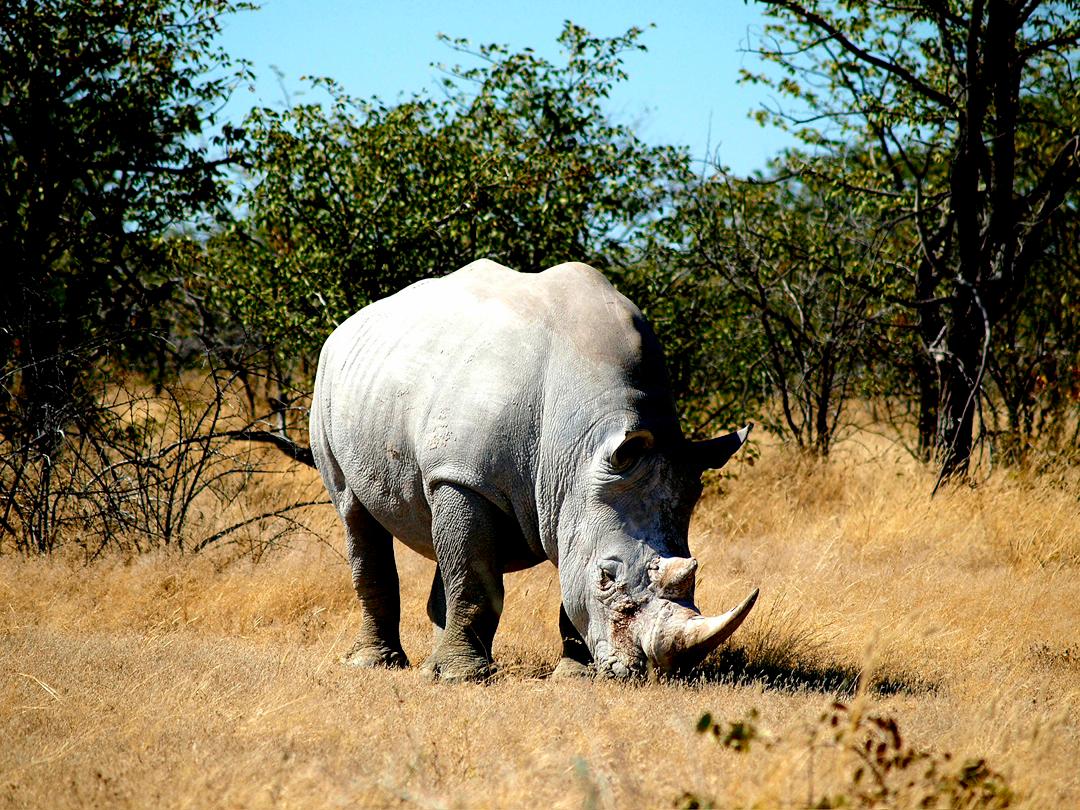
You’ll start early this morning with a safari guide for your game drive to look for your favourite animals today, as you’ll be on route to see and learn about as much of the free roaming wildlife in this area as you can. The Etosha National Park is famous for African elephant, lion, leopard, hyena, rhino, and other antelope sightings, offering a very pleasant experience, especially to first timers in the part. The waterholes at clearly marked and the maps of the park are very clear. Today’s route will take you throughout most of the southern and eastern parts of the Etosha National Park.
In the dry season, Etosha National Park has excellent viewing in the heat of the day – a fairly unique phenomenon thanks to the abundance of waterholes. Vast herds of zebra, springbok, impala and oryx are joined by ostriches, giraffe and elephants trying to cool down and quench their thirst.
ACTIVITIES & SERVICES
Etosha National Park
INCLUDED
- Dinner, Bed & Breakfast
- Bottled Still Water
EXPERT TIPS
WHAT TO EXPECT ON A GAME DRIVE
Every game drive is different – which keeps things exciting – but the format of a game drive is likely to be quite similar, wherever you are:
- The time of day will usually be early mornings, late afternoon or at night – the coolest times of the day when most animals are more active.
- With the length and distance will vary, game drives last around 3 to 4 hours, and will include a break.
- With luck you’ll see a mix of different wildlife sightings, with stops to take in and photograph each animal type.
- You should get plenty of conversation with your tour guide to learn about the animals you see, plus lots of other related info about the habitat, plants, birds, animal tracking, and if you’re lucky, the occasional amazing animal story or two.
- A break where you can get out of the vehicle and have a drink and a snack – usually somewhere with a great view of wildlife and/or the bush. On morning drives you’ll likely have a hot drink, and afternoon drives warrant something a little colder. Unbeatable!
The Etosha National Park is famous for African elephant, lion, leopard, hyena, rhino, and other antelope sightings, offering a very pleasant experience, especially to first timers in the part. The waterholes at clearly marked and the maps of the park are very clear. Our route also takes us to the Etosha Pan lookout point, to see the vastness of the great white open space.
In the dry season, Etosha National Park has excellent viewing in the heat of the day – a fairly unique phenomenon thanks to the abundance of waterholes. Vast herds of zebra, springbok, impala and oryx are joined by ostriches, giraffe and elephants trying to cool down and quench their thirst. You can simply drive to a waterhole, sit there, and watch the steady parade of animals make their way to and from the pool.
Day 12: Windhoek
- Breakfast & Transfer from Etosha National Park to Windhoek
- Optional stopover at Okahandja Craft Market
- Transfer from Okahandja to Windhoek
Today we will head to the airport, but this journey warrants a short stop in Okahandja. We’ve also come to the end of our safari as we continue south heading on the B1 road to the capital city of Windhoek, but transiting via Okahandja, and here we will take time to stop as this town is home to Namibia’s largest wood carving and craft market.
INCLUDED
- Bed & Breakfast
- Bottled Still Water
EXPERT TIPS
Namibian Culture and etiquette:
Greetings are key to ensuring good social relations in Namibia, as in many parts of Africa. Before you ask a question or a favour, you should always make sure you greet the person and enquire after their health. If you can manage that in the relevant local language, then so much the better. Handshakes are the most common form of greeting, especially among men, and always with the right hand. Men will often use the three-part African handshake when greeting other men. Women are more likely to greet each other and men with words, though they may shake hands. If in a more traditional rural setting, a small nod, bow or curtsy may be given by the junior to acknowledge seniority.
Photography is a thorny area, which has been badly handled by many tourists over a number of years, especially with regards to the Himba, Herero and the San, where taking photos tends to dominate interactions to a worrying extent. The crass behaviour of some tourists who snap away without permission of the individuals concerned and with minimal interaction with them has led to difficult relations between some Namibian communities and tourists. Some Himba and Herero women in particular are now demanding payment for having their photo taken. Always ask permission if you wish to take a photo, and only after you have spent time in meaningful interaction with the person or people concerned.
Modest dress is also important, especially when visiting rural areas, which are generally dominated by Christian conservatism. In the extreme heat it may be tempting to strip off to the bare essentials, but notwithstanding the risk of sunburn, short, skimpy attire is fine for the beach but can give offence in villages.There is generally a high level of press freedom in Namibia, particularly in the print media.
The country’s top newspaper, both in quality and circulation, is the mainly English-language (with some content in Oshiwambo) daily The Namibian. The New Era is the state-owned daily paper. Several other dailies exist, including ones in Afrikaans and German, as well as several weekly papers and monthly magazines. There are over twenty private and community-owned radio stations, as well as the ten channels in different languages operated by the government-owned Namibian Broadcasting Corporation (NBC).
Day 13: End of Itinerary
- Transfer form Windhoek to Hosea Kutako International Airport
There are lots of attractive green areas in the centre of Windhoek flanked by both modern buildings and fine German-colonial architecture. This city in Namibia is clean and orderly and the pace of life is busy but not overwhelming.
Historically known as a residential area for racial segregation during apartheid, Katutura symbolizes Namibia’s dark past (and even in some way present). While the city has left that chapter more or less behind, Katutura became the backbone of Windhoek.
“It’s time to say goodbye, but I think goodbyes are sad and I’d much rather say hello. Hello to a new adventure.” Ernie Harwell
INCLUDED
- Transfer from Windhoek to Hosea Kutako International Airport
EXPERT TIPS
A few tips which will make your long haul flights a little more comfortable:
- Dress Comfortably Flying is one of those things where you need to prioritize comfort over everything else. Especially on flights that are in the 10+ hour range. One easy way to make your flight more comfortable is to wear the right kind of clothes. Tracksuits, leggings, cotton t-shirts, hoodies and lightweight sweaters are all great options.
- Pack Snacks Let’s face it. Airplane meals are nothing like what your mother used to make! Especially if you’re flying economy. They’re usually far from the healthiest option, let alone tastiest, so your best bet is to pack your own snacks.
- Always Bring Entertainment If you’re anything like me, then you don’t just want to pass the time on a long flight, you want it to go by as fast as possible. This means that you will need an activity that you find both fun and engaging. Whether it’s watching three movies in a row, binge-watching an entire season on Netflix, or devouring a good book – make sure that you have enough options to keep you entertained for the length of your flight.
- Consider Noise Cancelling Headphones The difference between a nightmare flight, and one you enjoy, can be as simple as bringing noise-canceling headphones. Even though some airlines will distribute earphones for free, they’re usually cheap and nasty and not great at drowning out the background noise.
- Hydrate Your Skin Too The pressurized air inside the cabin is incredibly dry and it’s not great for your skin. After a long flight, it might even feel like you washed your face with sandpaper. Prepare yourself for that – bring a moisturizer on the flight and maybe even a sheet mask if you can. Lip balm is also a good idea because your lips will dry out far sooner than your face. Just make sure that the moisturizer you decide to bring is in accordance with the TSA rules – meaning, it needs to be in packaging of 100ml (3 ounces) or less.
- Don’t Wear Contacts I can’t stress this one enough – wearing glasses instead of contact lenses on a flight. This can be the difference between a relaxing flight, and having to rush to the optometrist as soon as you land. The dry air inside the cabin will dry up your contact lenses, often causing them to stick to your eyes. Not only is this really uncomfortable, imagine what happens when you try to remove them afterwards!
- Maintain Personal Hygiene Making yourself even a little more comfortable on a long flight can be as simple as freshening up mid-flight.
- Wear Compression Socks Compression socks help regulate the blood flow in your legs, and they are particularly useful on longer flights. Especially if you usually have issues with swelling in your feet or ankles.
- Organize Your Daypack When you get to the airport you have one important goal – board the plane as quickly and as efficiently as possible. And, if you act like a headless chicken when you reach the TSA checkpoint, you’ve not only failed yourself but potentially made yourself a target for a special security check. That’s why you want to organize your daypack (or carry on) down to the very last detail, instead of just throwing everything inside. Remember, when you get to the security checkpoint you’ll have to take out your laptop and toiletries. So, put those somewhere easy to reach and not at the bottom of the bag.
- Move Around on Layovers The biggest mistake you can make on a layover is sit in the lounge and stare at your phone. Take the opportunity to stretch, walk around, and maybe even light exercise if it’s possible. Do anything you can to get the blood flowing. You can sit again once you board the plane again. Now is the time to move.