
NAMIBIA, BOTSWANA &VICTORIA FALLS
KALAHARI, OKAVANGO DELTA, CHOBE & VICTORIA FALLS
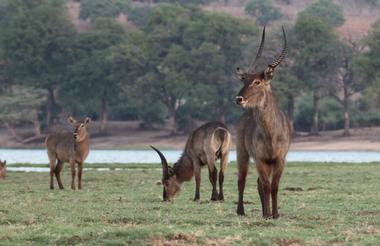
This is a comprehensive 8 day tour of Namibia, Botswana and Victoria Falls that any traveler can undertake, as it covers some of the most popular highlights of Southern Africa, but allows you to experience some of the hidden treasures as well. The traveler will experience three of Africa’s wonders, the Okavango Delta, Chobe National Park & Victoria Falls, and also see other fascinating and unforgettable sights in Namibia.



- TOUR PRICE
Departing Cape Town:
- R44,600 per person sharing
- Single Supplement of R7,900 applies
❗ Excludes flights
- EXCLUDES
- International flights
- Regional & Domestic flights
- Insurance for lost luggage, cancellation, medical repatriation, visas…
- Extra activities not displaying in this itinerary or marked by the symbol "Not Incl."
- Meals not specified in the itinerary
- Drinks, tips, curios etc.
- 8 DAY ITINERARY
Day 1: Kalahari North
- Transfer from Windhoek Airport to Harnas Wildlife Foundation
- Arrival and Lunch (Not Incl.) at Harnas Wildlife Foundation
- Sundowner Lion Roar Activity
- Dinner at Harnas Wildlife Foundation
We head to the Harnas Wildlife Foundation today, which is a charitable organisation and one of the few orphanages and wildlife sanctuaries for wild animals in Southern Africa. A sizable number of animals including lions, leopards, cheetahs, endangered Africa wild dogs, baboons and tortoises reside on this 10 000-hectare (24 700 acres) farm which has been transformed into a wildlife protection haven.
The owners of this beautiful reserve have dedicated their lives to establishing the most adequate and secure home possible for abandoned or orphaned wild animals and succeeded in creating a Noah’s Ark in the African Savannah.
Today these animals are transferred to the Harnas Wildlife Foundation in order to protect them from being shot outright.
ACTIVITIES AND SERVICES
Lion Roar Activity
INCLUDED
- Dinner, Bed & Breakfast
- Sundowner Lion Roar Activity
- Bottled Still Water
EXPERT TIPS
Join the Harnas Wildlife Foundation in experiencing unforgettable moments at one of the most renowned African Wildlife Destinations in Namibia. Superb facilities in spectacular bush settings designed in true African style and spirit.
Harnas Wildlife Foundation it is also a rehabilitation centre that releases animals in different areas in Namibia in cooperation with the Ministry of Environment and Tourism. Furthermore Harnas employs as many workers as possible form the close vicinity in order to raise the socio-economic profile of the community.
In order to achieve these goals Harnas hosts several projects:
- Harnas Lifeline Project
- Harnas Wild Dog Project
- Harnas Voluntary Project
- Cheeky Cheetah Project
- San Development Aid
Lifeline Project
The Lifeline Project concentrates on the reintroduction of animals, which are able to be reintroduced, into the wild. The animals have an area of 8000 ha in which they learn the skills that are essential for the survival in the wild. For the establishment of the Lifeline area old farm fences have been removed and a new double fence of 40 km length surrounding the area was built. Without human influence the instincts and skills of the animals are developed naturally. Harnas is home to about 25 animal species.
Wild Dog Project
The main aim of the Harnas Wild Dog Project is the preservation of the African Wild Dog population. They are one of the most threatened species in Africa. Formerly found in 39 countries the Wild Dog is presently only occurring in fourteen countries. Harnas is home to nearly thirty dogs. The reintroduction into the wild is not the main aim here as numbers are too small and only make sense in relatively small and fenced reserves. Thus the Wild Dogs have been reintroduced to the wild in the 8000 ha protected area on Harnas. Only with the support of the farmers can these animals be reintroduced into the wild throughout Namibia and the whole of southern Africa.
Harnas Voluntary Project
Harnas offers interested animal friends the possibility to work as voluntaries for the different projects. The time frame is between 14 days and maximum three months. The participation incurs a fee. A visa is compulsive.
Cheeky Cheetah Project
The Cheeky Cheetah Project deals with the active support of the San. Through the extension on farm land they have lost their natural living environment. As the San live on hunting and gathering of fruit and roots they live a nomadic life. At Harnas a group of San has found work and their kids are prepared for school at the Cheeky Cheetah day centre. There they also learn Afrikaans in order to manage at school later.
San Development Aid
The San development aid should help them to cope better after being socially excluded until today. Firstly their long standing manual tradition to produce jewellery from ostrich eggshells is supported, which is then sold at Harnas and of which all sales revenue is returned to the San. Secondly they receive an education in different technical professions to assist them to for example find work on surrounding farms.
Due to its animal protection, nature conservation and social projects Harnas has become well known throughout Namibia.
Day 2: Ghanzi
- Bushman Walk Activity at Harnas Wildlife Foundation
- Transfer from Harnas Wildlife Foundation to Symponia Guesthouse (Lunch (Not Incl.) on route)
- Arrival and Downtime at Symponia Guesthouse
- Dinner at Symponia Guesthouse
We set off from the Harnas, Namibia, today after our Bushman Walk, to make provision for border control as we cross into the lovely country of Botswana today. Once we clear border control and make our way into Botswana, your guide will have a chance to familiarize you with Botswana.
Our afternoon arrival at the accommodation will give you a chance to enjoy a relaxing afternoon in the heart of the Kalahari at our beautiful lodge.
ACTIVITIES AND SERVICES
Guided Bush Walk
INCLUDED
- Dinner, Bed & Breakfast
- Bushman Walk Activity
- Bottled Still Water
EXPERT TIPS
Ghanzi – also known as “The capital of the Kalahari” must be one of Botswana’s most intriguing towns – situated in the middle of nowhere and separated from the rest of the world by hundreds of kilometres of roads. The first and probably major impression you will have of the interminable journey from Gaborone to Ghanzi is the sheer monotony of the landscape. For the most part the terrain is flat and featureless, with some scrub bushes, thorn trees and grasslands. In the summer the heat is sweltering, in winter the drive is made more tolerable by cooler temperatures. The road is excellent tarmac.
Once, parts of this vast region were populated only by Bushmen (Basarwa) who had perfected survival strategies for living in this inhospitable land. Later the Bakgalagadi arrived and today live in Kalahari villages such as Ncojane, Matsheng and Kang.
After the Bushmen, the Ghanzi area was settled by Hottentots, who it is believed, tended large herds of cattle. The first white settlers arrived in 1874, led by Hendrik van Zyl, a flamboyant character whose legend still persists in Ghanzi, as does the remains of his once palatial house.
More white settlers followed in the late 1890s. These were trekkers – Boers who sought to escape the authorities in South Africa, some believing they could establish an independent republic deep in the interior of the Kalahari. They were lured by extravagant offers of 5,000 morgen (about 12.76 square kilometres) of land in the Ghanzi district for a £1 application fee, plus free drilling equipment. Much of the land on offer in the Ghanzi area had, in fact, been fraudulently acquired from Tawana Chief Moremi in Maun by men working for Cecil Rhodes; he had earmarked the area as yet another desirable acquisition for his ever-expanding holdings in Southern Africa.
The first group of trekkers, travelling thousands of kilometres by oxcart and facing considerable hazards, merely exploited game and other resources in the area and then moved on. But newcomers in the early 1900s were committed to cattle ranching and stayed. By 1936 there were over 40 farms and in the 1950s more farms were allocated.
Day 3: Maun
- Breakfast and Transfer from Ghanzi to Maun
- Lunch (Not Incl.) on route and Check-in at Cresta Riley’s Hotel
- Downtime in Maun
- Dinner at Cresta Riley’s Hotel
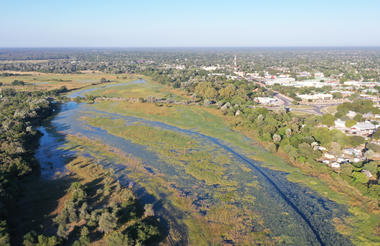
Our journey takes us north-east towards Maun, passing through a few villages along the way. We will be accommodated at a lovely riverside hotel here and your guide will have a chance to familiarize you with the area.
Optional sunset scenic flights over the Okavango Delta are on offer the those interested. Scenic flights offer passengers the opportunity to discover the lush surroundings of the Okavango Delta by air. Not only will flyers witness the magnificent scenery of the area, they’ll also have a high chance of spotting wildlife.
INCLUDED
- Dinner, Bed & Breakfast
- Bottled Still Water
EXPERT TIPS
Art is at the heart of Botswana’s historical-cultural life; from the San, who painted the world they lived in on the rock walls of their shelters to poets by the likes of Barolong Seboni, who pioneered the country’s contemporary literature scene. Of all mediums, Botswana is most famous for the basketry produced in the northwestern regions of the Okavango Delta by Wayeyi and Mbukushu women.
Botswana’s cuisine has a little something for everyone. Two main dishes are considered local. Seswaa is meat (beef, mutton, or game) that is boiled for hours until tender, then served with maize meal (called pap) and greens.
Courtesy of your location, there are both water and land activities on offer all year round. Motorboats or Mokoro provide a chance to experience the incredible bird, plant and reptile species found in the aquatic habitat of the Okavango Delta.
Day 4: Maun
- Breakfast and Full Day Game Activity in Okavango Deltavia Mokoro or Motor Boat
- Dinner at Cresta Riley’s Hotel
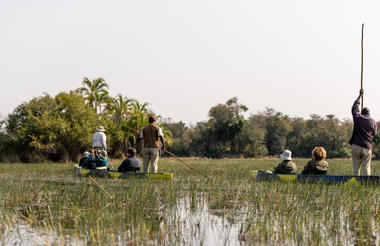
If you truly want to experience Africa at its wildest, there’s no better way to do it than with an Okavango Delta mokoro ride. The Delta is nearly 5 million acres of swampy marsh and grassland in northern Botswana, and the mokoro is a traditional canoe used to navigate the area’s challenging terrain. These amazing traditional canoes (mokoros) are perfectly designed to manoeuvre through the narrow waterways of the delta and give us a chance to go further into the delta allowing better game viewing in this area.
Mokoros carry three people, two seated passengers and one driver. The driver stands in the rear of the canoe, (a real feat of balance), and uses a long wooden pole to propel and steer the Mokoro through the twisting channels. You will not be back at the camp until late in the afternoon and dinner will be at a local restaurant.
ACTIVITIES AND SERVICES
Thamalakane Mokoro Safari
INCLUDED
- Dinner, Bed & Breakfast
- Full-Day Game Viewing Activity in Okavango Delta via Mokoro or Motor Boat
- Bottled Still Water
EXPERT TIPS
Clothing– Lightweight, neutral-coloured clothing is best. Note that camouflage-patterned clothing is not recommended, this is only permitted for the army and it is illegal for anyone else. Casual and comfortable clothing is recommended, safari is a casual affair.
- Shirts and T-Shirts– Cotton and linen long sleeve shirts and short sleeved T-Shirts are recommended year round, even in winter the midday sun is very warm. Long sleeves are more useful as they not only protect against the sun but also any insects in the evenings.
- Long trousers/pants and shorts. Lightweight materials are better than thicker materials like jeans which can be hot (and take a longer time to dry). (Ladies, skirts are not very practical on safari as climbing into and out of the 4×4 vehicles can be awkward with a skirt.
- A warm sweater/jersey/fleece is recommended year round for mornings and evenings. In winter a second thicker fleece jacket would be useful, June-September.
- A lightweight rain/wind jacket – good for any sudden showers in summer and useful as a windproof outer layer in winter.
- Shoes – A pair of casual shoes such as sandals for in camp and a pair of closed comfortable shoes for walking (hiking boots are not necessary, these will be hot and bulky).
- Swim wear and sarong/kikoy. Many camps have a pool for relaxing between activities. The Kikoy is always useful, even away from the pool for shading or acting as an extra scarf too).
- Winter essentials – wool hat (beanie), scarf and gloves are suggested for the early morning drives. The first 1-2 hours can be very cold until the sun is fully up.
- Ladies– The roads can be bumpy, a sports bra is suggested for a more comfortable 4×4 drive.
Other essential items-
- Hat with a wide brim. The sun is powerful in Botswana and quite raw.
- Sunscreen with a high factor, minimum factor 30.
- Sunglasses with high UV resistance are recommended.
- Torch – a small torch is handy. If doing a mobile safari a headtorch is recommended.
- Camera – lenses and all the necessary charging accessories.
- Binoculars are handy but not required. (If you have a good zoom on your camera you may prefer to use this).
- International plug adaptor (the camps use a variety of plug points including the 3 prong square plug points, the SA 3 prong round point and the European 2 prong round points. Most camps will have a variety of options.
- Personal toiletries – Nearly all camps will provide the basic toiletries such as body wash, shampoo and conditioner as well as insect repellent so do not pack these. Higher end camps will provide lotions. All other toiletries should be packed with you. It is useful to carry chap tick/lip balm as the drives in the open vehicles can be dehydrating, eye drops are also recommended for this reason. Other suggestions include insect repellent, rehydration sachets and antihistamine if you suffer from allergies/hay fever as the grass and dust levels can be quite high in the bush.
- Motion sickness tablets-for those who suffer from this it would be wise to pack some tablets for the short flights which can be bumpy in summer with the rising heat.
- Anti-malarials – The Okavango is in a malaria area, the relevant precautions should be taken.
- Book – you will have 3-4 hours a day to relax in camp, a good book is recommended.
- Cash – see below
Cash – How much cash to take for tipping on safari?
The Botswanan currency is Pula. There are ATM cash points in most major towns however we strongly recommend brining cash as there is little time to visit an ATM on most Botswana safaris. US Dollars are widely accepted in camps, as well as euros. Credit cards are also accepted for payments in camp for curio shop purchases, spa treatments etc.
Tipping whilst on safari can be a sensitive topic and it is never possible to provide a definitive guidance. Tipping is always completely discretionary and you should never feel under any pressure to tip. It is however appropriate if you feel that the measure of service you received warrants a show of your personal appreciation. Whilst guides make your safari experience, don’t forget those staff, many of whom you will never meet, who make safaris truly memorable.
- Guides are tipped personally at the end of your stay and general guidance is that USD 10-USD15 per person per day would be considered a good tip.
- General Staff are tipped through a common tip box. These tips are distributed to all staff equally, but managers and guides are often excluded. USD 10 to 20 per day would be considered a good tip.
- What bags to use for safari?
The shape and format of your luggage is just as important as its weight, as it will need to fit inside the cargo pod under each aircraft. Soft-sided bags are recommended, holdall-type bags rather than rigid or framed suitcases to allow the bag to be manoeuvred into the pod. In the event that your bag does not fit in the cargo pod you will be asked to repack the bag or is space allows it will need to be carried inside in the aircraft and charged as excess luggage.
Day 5: Nata
- Breakfast and Transfer from Maun to Nata
- Lunch (Not Incl.) on route and Check-in at Nata Lodge
- Downtime and Sunset Drive into Makgadikgadi Pans National Park
- Dinner at Nata Lodge
We are back on the road again as we head to Nata, the gateway to the Magkadikgadi Pans, to the east of Maun. You are booked for a sunset drive into the Makgadikgadi Pans National Park, followed by another lovely dinner at our lodge.
The name Makgadikgadi means ‘vast, lifeless land‘. For those who prefer solitude and silence this is paradise, as even during the high season people are scarce here.
ACTIVITIES AND SERVICES
Makgadikgadi Salt Pans
INCLUDED
- Dinner, Bed & Breakfast
- Sunset Excursion to the Makgadikgadi pans
- Bottled Still Water
Day 6: Kasane
- Breakfast and Transfer from Nata to Kasane
- Lunch (Not Incl.) and Check-in at Wild View Resort Kasane
- Downtime in Kasane
- Dinner at Wild View Resort
We make our way to the gateway to the Chobe National Park today; Kasane is an important point of debarkation for the nearby Victoria Falls in Zimbabwe and Livingstone in Zambia, and Namibia’s Caprivi Strip. Quite impressive!
The afternoon is a chance to explore the town of Kasane accompanied by your guide, and perhaps visit some currency exchange bureaus as you will require US$ for our trip to Victoria Falls, if you haven’t already done so.
INCLUDED
- Dinner, Bed & Breakfast
- Bottled Still Water
EXPERT TIPS
Best Time for Chobe River Cruises:
This is a year-round destination for spotting wildlife; however, the scenery changes dramatically with the seasons so there are factors to consider.
The dry season, from April to October, is ideal for a first-time trip to Africa as this is when you are likely to see the most wildlife. As water holes dry up, animals move toward the Chobe in search of water, creating spectacular viewing opportunities.
Leave dressy attire at home. In any case, you can keep it casual when you pack as these sailings are laid-back about attire. Bring T-shirts, shorts, cotton pants, long sleeve tops for protection against the sun, a hat, sunglasses and, most of all, comfortable shoes or sneakers for walking ashore on uneven ground.
Day 7: Kasane
- Breakfast and Morning Game Drive in Chobe National Park
- Lunch (Not Incl.) in Kasane
- Sunset Boat Cruise on Chobe River
- Dinner at Wild View Resort
Spread out along the banks of the Chobe River, Kasane presents a huge collection of hotels, guest houses and campsites that accommodate all the visitors to the national park. Some are superbly located, with the breathtaking views of the river and its wildlife.
Tonight’s dinner will be at our lodge and will also be your final evening with our guide.
ACTIVITIES & SERVICES
Chobe Game Viewing
Chobe Boat Cruise
INCLUDED
- Dinner, Bed & Breakfast
- Morning Game Drive
- Sunset Boat Cruise
- Bottled Still Water
EXPERT TIPS
The town of Kasane has a decent gallery, The African Easel Art Gallery, for you to enjoy during those midday hours outside of game-driving time, as well as a few roadside traditional African craft stalls between the town and the Kazangula ferry.
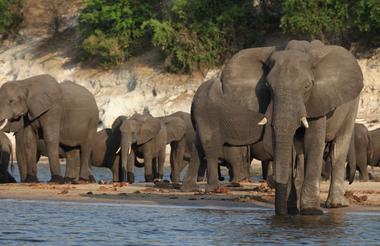
The crocodiles and hippos thrive in the forbidding Chobe River and on the land side there is often displays of different antelope, buffalo and often even the Big Cats come to the riverbanks for their sundowner drink. The Chobe River provides a very broad habitat for bird life and it is possible to see many stunning species of birds.
Day 8: Victoria Falls
- Breakfast and Transfer from Kasane to Victoria Falls
- Optional Activities in Victoria Falls
- Dinner in Victoria Falls
Today you will cross the border into Zimbabwe around noon, for your relatively short drive to the town of Victoria Falls. You will be accommodated close to the banks of the Zambezi River and you will have some time to explore the safe and cozy town of Victoria Falls on your own and also visit the mighty Victoria Falls. The view of the waterfall from the Zimbabwean bank is captivatingly beautiful.
RECOMMENDED
High Tea on Stanley’s Terrace, Victoria Falls Hotel
Victoria Falls – The Falls
INCLUDED
- Bed & Breakfast
EXPERT TIPS
International travellers can get a visa on arrival in both Zimbabwe and Zambia, and you’ll want to purchase the KAZA UniVisa visa, which allows you to cross both borders and move between both sides of the falls. If you purchase this visa, you’ll not only save some money, you won’t have to wait in line to cross over to the other side of the falls (Zambia).
The KAZA UniVisa costs around $50 USD, and you can cross the border as many times as you like, as long as you stay within Zambia and Zimbabwe. The visa prices and requirements vary quite a bit for other nationalities (and are always subject to change).
Victoria Falls is a tourist hot spot, and it’s just over a mile from the entry into the park. And the area is way more than a photo op! You can go white-water rafting, hiking, or you can check out the local wildlife and so much more.
You’ll want to plan on plenty of time to take it all in, as there are so many amazing views of the Victoria Falls.
One of the best sights is from the truly breathtaking Devils Pool, where you can lounge on the edge of the world. Whatever you do on the Zambian side, you have to check out the Knife Edge Bridge for a breathtaking view of Victoria Falls, but be sure to bring your raincoat! The Knife Edge Bridge connects to Livingstone Island. Located in the heart of the Zambezi River, this gorgeous island leads right up to the 335-foot drop of thundering water from the falls.
What to bring along:
Sun Protection: The rays can be intense here! Pack sunglasses and a sunscreen with UVA and UVB protection. An oversize hat is also handy for your neck and face.
Comfy Shoes: There is so much to see around Victoria Falls. Pack comfortable shoes, and plan on doing tons of walking.
Waterproof Jacket: No surprises here! You can get seriously soaked at Victoria Falls, and waterproof gear is essential. I also advise against wearing anything jeans-like because it takes ages to dry.
US dollar: Please be sure to bring along USD currency in various denominations, as obtaining cash (USD is the primary currency used in Zimbabwe) are difficult to obtain in Victoria Falls. These are used to purchase curios, porterage, and payment for certain activities.
Covid-19 vaccination record: Zimbabwe still requires a Covid-19 vaccination certificate for entry into Zimbabwe via land borders.
Day 9: End of Itinerary
- Breakfast and Optional activities in Victoria Falls
- Transfer from Victoria Falls to Victoria Falls International Airport, Zimbabwe
We have come to the end of your wonderful safari, and hope that it will leave lasting memories!
We would recommend an afternoon flight back home on this day, giving you some time to conduct some of the morning activities that you would like. These include bungee jumping, gouge swings, crocodile cage diving, white-water rafting, but also more relaxing activities like morning game drives, lion walks, boat cruise on the Zambezi, and elephant back safaris.
INCLUDED
- Bed & Breakfast
- Transfer to Victoria Falls International Airport
EXPERT TIPS
Victoria Falls Airport is a small airport in comparison to most international airports around the world, but that’s part of the appeal.
The international terminal has 14 check-in counters, 9 boarding gates, 3 baggage carousels, several souvenir shops and 2 restaurants. The Victoria Falls airport is 22 km or a 20-minute drive from Victoria Falls town.
A few tips which will make your long haul flights a little more comfortable:
Dress Comfortably
Flying is one of those things where you need to prioritize comfort over everything else. Especially on flights that are in the 10+ hour range. One easy way to make your flight more comfortable is to wear the right kind of clothes. Tracksuits, leggings, cotton t-shirts, hoodies and lightweight sweaters are all great options.
Pack Snacks
Let’s face it. Airplane meals are nothing like what your mother used to make! Especially if you’re flying economy. They’re usually far from the healthiest option, let alone tastiest, so your best bet is to pack your own snacks.
Always Bring Entertainment
If you’re anything like me, then you don’t just want to pass the time on a long flight, you want it to go by as fast as possible. This means that you will need an activity that you find both fun and engaging.
Whether it’s watching three movies in a row, binge-watching an entire season on Netflix, or devouring a good book – make sure that you have enough options to keep you entertained for the length of your flight.
Consider Noise Cancelling Headphones
The difference between a nightmare flight, and one you enjoy, can be as simple as bringing noise-cancelling headphones. Even though some airlines will distribute earphones for free, they’re usually cheap and nasty and not great at drowning out the background noise.
Hydrate Your Skin Too
The pressurized air inside the cabin is incredibly dry and it’s not great for your skin. After a long flight, it might even feel like you washed your face with sandpaper.
Prepare yourself for that – bring a moisturizer on the flight and maybe even a sheet mask if you can. Lip balm is also a good idea because your lips will dry out far sooner than your face. Just make sure that the moisturizer you decide to bring is in accordance with the TSA rules – meaning, it needs to be in packaging of 100ml (3 ounces) or less.
Don’t Wear Contacts
I can’t stress this one enough – wearing glasses instead of contact lenses on a flight. This can be the difference between a relaxing flight, and having to rush to the optometrist as soon as you land. The dry air inside the cabin will dry up your contact lenses, often causing them to stick to your eyes. Not only is this really uncomfortable, imagine what happens when you try to remove them afterwards!
Maintain Personal Hygiene
Making yourself even a little more comfortable on a long flight can be as simple as freshening up mid-flight.
Wear Compression Socks
Compression socks help regulate the blood flow in your legs, and they are particularly useful on longer flights. Especially if you usually have issues with swelling in your feet or ankles.
Organize Your Daypack
When you get to the airport you have one important goal – board the plane as quickly and as efficiently as possible. And, if you act like a headless chicken when you reach the TSA checkpoint, you’ve not only failed yourself but potentially made yourself a target for a special security check.
That’s why you want to organize your daypack (or carry on) down to the very last detail, instead of just throwing everything inside. Remember, when you get to the security checkpoint you’ll have to take out your laptop and toiletries. So, put those somewhere easy to reach and not at the bottom of the bag.
Move Around on Layovers
The biggest mistake you can make on a layover is sit in the lounge and stare at your phone. Take the opportunity to stretch, walk around, and maybe even light exercise if it’s possible. Do anything you can to get the blood flowing. You can sit again once you board the plane again. Now is the time to move.